By: Elizabeth Goldberg & Alicia Stromberg
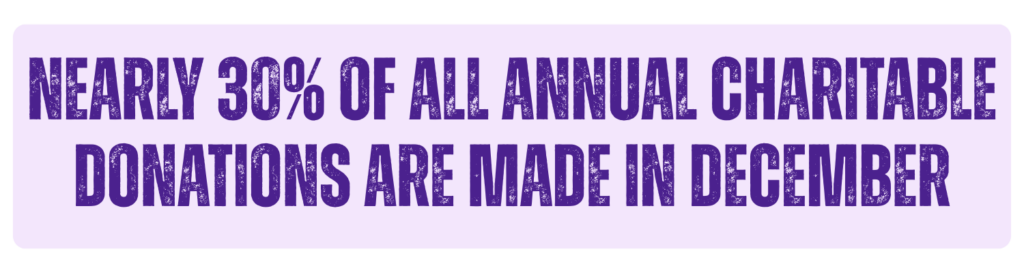
Nearly 30% of all annual charitable donations are made in December.
It’s every development professional’s favorite time of year: end-of-year giving! Donors are naturally primed to give at the end of the year, whether driven by holiday generosity, planning their tax strategy, or responding to a year’s worth of engagement.
End-of-year giving is more than a single appeal. It’s the culmination of year-round donor cultivation and a powerful opportunity to re-engage new donors who joined through Giving Tuesday or earlier appeals. With 2025 shaping up to be an especially significant year for charitable giving, nonprofits need to prepare thoughtfully and proactively. How is your organization leveraging this moment and sharing the impact of your work?
Why 2025 Will Be a “Big Year” for Giving
New tax laws taking effect in 2026 are expected to incentivize donors (especially major donors) to give more in 2025. Donors who itemize will benefit from making larger gifts before the 2026 changes take effect, and many are planning accordingly.
For nonprofits, that means end-of-year giving in 2025 may exceed typical levels, creating an opportunity to proactively plan and create financial stability before the policy shifts.
Prepare Yourself
Strong end-of-year fundraising starts with strong groundwork. Set yourself up for success by gathering the essentials:
- Program outcomes
- Impact stories
- Board giving and lists
- Donor history
- Financial documents
- Legal and compliance materials
- Fundraising goals for 2026 and beyond
 Alloy Tip: Prioritize clean, data collection early and use impact stories to illustrate the outcomes. If you need support for messaging, campaign planning, or major donor outreach, don’t wait! Alloy Fundraising is here to help you build a strategy that meets the moment.
Ground Yourself in a Theme or Story
The most effective end-of-year campaigns are anchored in a message that donors can immediately connect with and help visualize their impact. Choose a clear, compelling theme that is emotionally resonant and mission-driven.
Focus on:
- A specific program or goal that paints a vivid picture of what donor support makes possible
- Current challenges your community may be facing (such as rising food insecurity, increased demand for housing support, shrinking public benefits, etc.)
- Using imagery, anecdotes, and real client stories to help donors see the impact
Alloy Tip: Use one anchor phrase or motif throughout the campaign (e.g., “Home is possible,” “Fuel the future,” “No neighbor goes hungry this winter”) to create consistency and recognition.
Appeal to All Your Donors
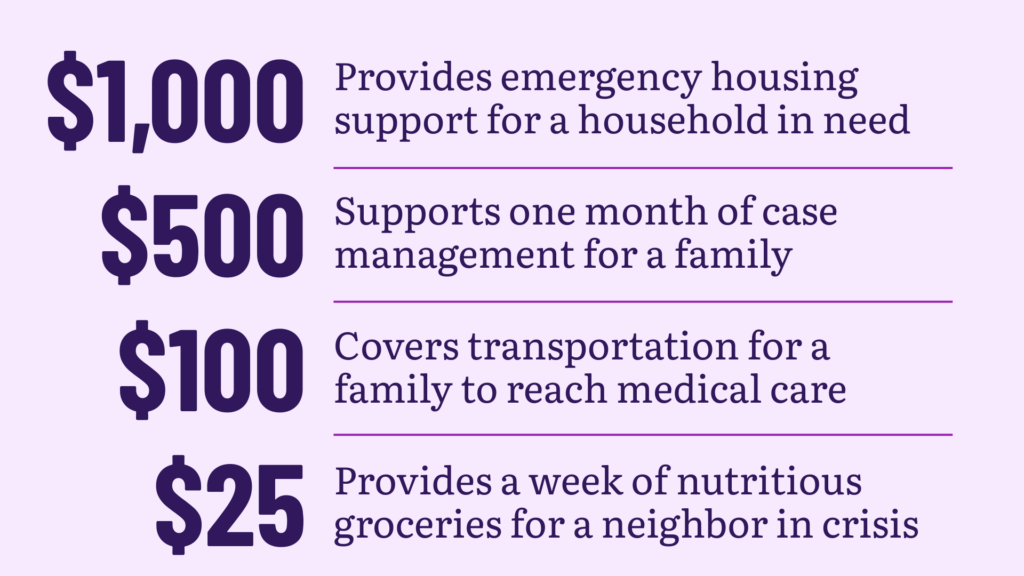
Create an appeal strategy that includes everyone across the giving spectrum. Celebrate a $5 gift as much as a $50,000 gift. All donors should feel essential to your mission. Remind donors of their impact throughout the year and in the appeal itself.
Write an appeal that creates a sense of community and purpose for your donors by using inclusive language (“Together, our community…” “Because of donors like you…”) . Ensure donors at every level can see the impact of their contribution by illustrating the impact through a client story.
Alloy Tip: When listing suggested levels on your donation page, list the levels from highest to lowest to encourage larger gifts.
Show up Across all your Channels
Your donors engage with you in many different ways—email, your website, social media, direct mail, and even text messages. Each of these is an opportunity to reinforce your end-of-year narrative and include one essential element: a clear ask.
Plan ahead by creating a visual communications calendar for the entire month of December and January. This helps your team see how messages align across channels, ensures consistency in story-telling, and keeps everyone on track during a fast-paced time period with lots of deadlines.
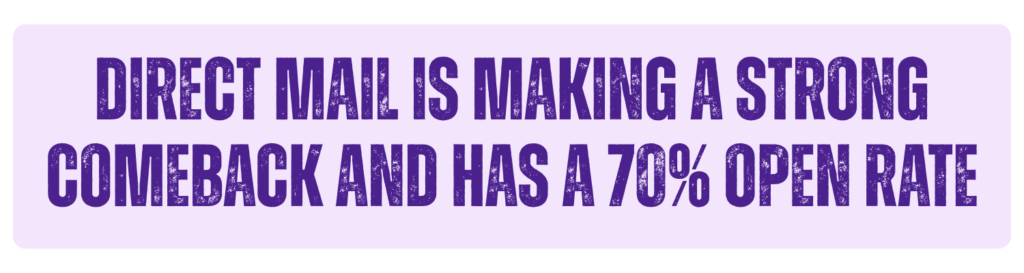
Direct mail is making a strong comeback across generations and has a 70% open rate. A well-timed, compelling physical appeal can break through digital noise and add a personal touch.
Alloy Tip: Use memorable email subjects, handwrite addresses, and use a live stamp to help you stand out from the crowd!
Go the Extra Mile to Personalize and Segment
One of the most effective ways to increase end-of-year giving is through thoughtful segmentation. Different donors have different motivations, and your outreach to them should reflect that.
- Consider segmenting your lists by groups such as:
- New donors
- Major donors
- Recurring donors
- LYBUNTs (Last Year But Unfortunately Not This) - Don’t overlook this group! Many nonprofits assume these donors have already given elsewhere or aren’t interested in giving again, but often they’re just waiting to be asked. Thank them for their previous support and invite them to re-engage.
- Donors who already gave this year - Donors who have contributed earlier in the year may be open to giving again, especially with upcoming 2026 tax changes creating new incentives. This is the perfect moment to express gratitude and extend another opportunity to make an impact.
Personalization matters. Reflect back the issues donors care about. If someone previously supported your food pantry, follow-up with impact from that program and invite them to deepen their support.
Alloy Tip: Handwritten notes and personal calls often make a far greater impression than email. Don’t be afraid to pick up the phone and call the donor or write a handwritten note. If the only contact information you have is a mailing address, use it!
Make it Easy to Give
Nearly one third of all donations happen on mobile devices, and an even higher percentage of visitors arrive at your website via mobile. If your donation pages aren’t mobile friendly, you could be losing out on donor dollars.
Mobile optimization isn’t just a design preference, it’s a donor experience strategy. Make sure your donation landing page and all marketing materials are mobile-friendly. Use large clear buttons, optimize images for fast loading, and offer mobile payment options like Apple Pay or Google Pay. Keep the layout single-column with a clear call-to-action and a mobile-friendly thank-you message. A donor who has to zoom in or search for the right button is a donor who might abandon the process altogether.
Beyond usability, ensure your website clearly lists all the ways donors can give. Your EIN, stock donation instructions, and Donor-Advised Fund (DAF) details should be easy to find. With only 7% of individual assets held in cash, donors increasingly rely on alternative ways to give. Providing this information will make it easy for donors to donate through these alternative methods.
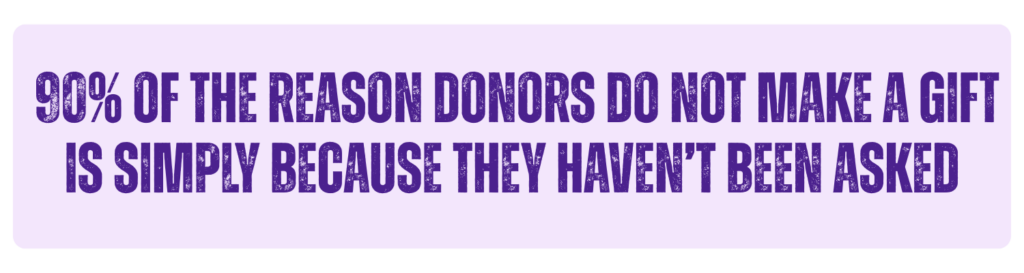
Alloy Tip: 90% of the reason donors do not make a gift is simply because they haven’t been asked. Include a clear confident solicitation in every communication, from emails to social posts to your website.
Say Thank You, Often
Weave gratitude and appreciation throughout your entire end-of-year campaign, not just after the gift is made. Donors, especially previous supporters, want to feel recognized for the impact they’ve already had. When donors feel valued, they are far more likely to stay engaged and give again.
Then, as you plan for January, map out how you will continue the stewardship cycle with timely tax receipts, personalized thank-you messages, and impact updates. Appreciation builds trust, deepens relationships, and lays the foundation for year-round generosity.
You've Got This!
End-of-year giving is one of the most powerful moments in the fundraising calendar. It’s a chance to celebrate your community, deepen donor relationships, and fuel the mission that drives your work every day. With thoughtful planning, compelling storytelling, and a strategy rooted in data and donor care, your organization can turn seasonal generosity into lasting impact.
At Alloy Fundraising, we’re proud to partner with nonprofits that are doing the hard and hopeful work of building thriving, equitable communities. If you’re looking to strengthen your end-of-year strategy or elevate your donor engagement and fundraising year-round, we’d love to walk alongside you. Together, we can help your mission reach new heights.